
Connect with Us


Rural Health Transformation is now a major federal funding channel for Mississippi’s rural healthcare system, with technology projects taking a visible share of the early awards. As of October 20, 2026, the available record supports a cautious reading: the money is significant, the technology priorities are practical, and the patient impact is not yet proven. For patients, clinics, and county leaders, the key finance question is whether these grants reduce access barriers without adding new layers of cost or confusion in medical billing.
What Rural Health Transformation Funds
Rural Health Transformation And State Timing
The Centers for Medicare & Medicaid Services awarded Mississippi $205,907,220 in fiscal year 2026 under a national $50 billion program for all 50 states, according to CMS award information. The Mississippi Division of Medicaid describes the grant cycle as a five-year effort distributing $10 billion per year from fiscal year 2026 through fiscal year 2030 through the federal Rural Health Transformation Program, with the state application required to be approved by December 31, 2025, according to Mississippi Medicaid.
For Mississippi, Rural Health Transformation began moving from federal authorization into state administration after the authorizing federal law was passed by Congress on July 3, 2025, and signed by the President on July 4, 2025, as described in the research record. Mississippi’s RHTP Office and official website were launched on April 29, 2026, within the Governor’s Office to coordinate implementation, administration, agency alignment, and transparency on awards and funding opportunities. Those governance choices matter because large healthcare grants can either create durable public assets or scatter funds across projects that are difficult to evaluate.
Why The First Awards Matter
On September 14, 2026, Governor Tate Reeves announced the first three rounds of Mississippi RHTP grants: 167 awards totaling $104,115,146. That represented more than half of the state’s first-year allocation. The size of the early awards suggests that Mississippi moved quickly to commit a large share of available funds, including grants tied to technology, infrastructure, workforce, and care delivery models.
The state plan identified six major initiatives: Statewide Rural Health Assessment; Coordinated Regional Integrated Systems; Workforce Expansion Initiative; Health Technology Advancement and Modernization; Telehealth Adoption and Provider Support; and Building Rural Infrastructure for Delivery, Growth and Efficiency. From a finance perspective, these categories cover both capital needs and operating capacity. Servers, electronic health record systems, backup infrastructure, and broadband connections are not glamorous purchases, but they can determine whether a rural clinic can schedule visits, retrieve records, bill accurately, and coordinate referrals.
Technology Priorities In Rural Health Transformation
Clinical IT, Cybersecurity, And EHR Access
Technology Priorities In Rural Health Transformation are centered on basic health IT needs as much as advanced tools. The Rural Provider Technology Grant Program included a $2,009,435 award to Lampton Medical Associates in Pike County to modernize electronic medical records for 50 rural practices. Family Health Center, Inc. in Jones County received $750,000 for cybersecurity, backup and disaster recovery, server upgrades, and network upgrades. These are infrastructure investments, not direct clinical treatments, so their value should be judged by whether they reduce downtime, support safer information exchange, and improve administrative reliability.
Another technology example is the $46,101 award to Hattiesburg Clinic, PA in Forrest County to add a tertiary cellular wireless wide-area network connection at 67 satellite clinics. The stated purpose was to preserve electronic health record access and strengthen infrastructure resilience and cybersecurity. For a rural practice, losing access to records can affect scheduling, prior authorization workflows, medication history review, claims submission, and referrals. Backup connectivity may sound technical, but it can affect whether a patient’s visit proceeds as planned when a primary network fails.
Remote Monitoring And Virtual Care
The University of Mississippi Medical Center in Hinds County received $149,100 to deploy AI-enabled remote patient monitoring tools for chronic disease and maternal health, with device data integrated into electronic health records. The research record supports describing this as a technology access investment, not as proof of better health outcomes. Remote monitoring may support care teams by supplying more frequent data points, but it also raises practical questions: which patients receive devices, how alerts are staffed, how data are reviewed, and whether patients have the connectivity and support needed to use the tools.
Copiah County Medical Center received $55,000 to launch a lung cancer screening technology enhancement program aimed at expanding access to preventive screening in a rural underserved population. Screening programs can carry financial and clinical implications for patients, including follow-up imaging, specialist referrals, and potential out-of-pocket costs. Public reporting should distinguish between equipment adoption, screening volume, follow-up completion, and patient affordability. Without that separation, a grant can look successful on paper while patients still face delayed appointments or unclear bills.
Affordability And Billing Transparency Issues
Capital Grants Versus Patient Bills
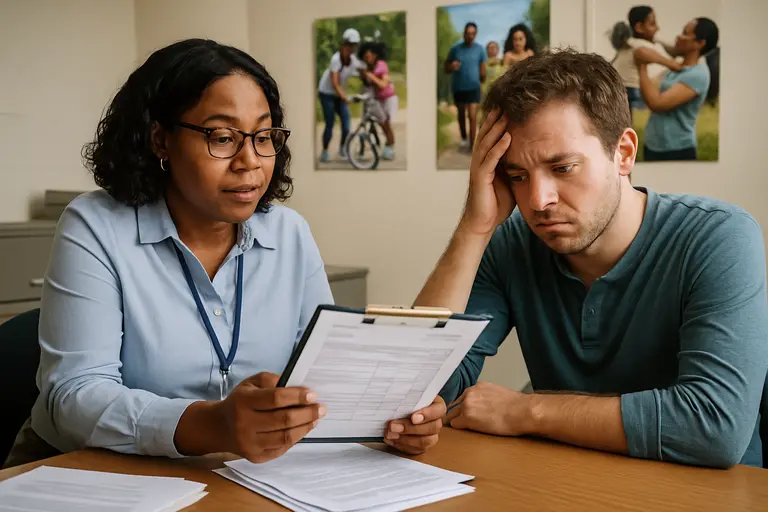
Federal grants can help rural providers buy or upgrade systems, but capital support does not automatically make care affordable. A clinic can have a newer EHR and still produce bills that are hard for patients to understand. A hospital can improve connectivity and still struggle with payer denials, prior authorization delays, or uncompensated care. That is why Mississippi’s technology spending should be evaluated alongside patient-facing measures such as appointment availability, referral completion, claim accuracy, and out-of-pocket exposure.
For those interested in wider health comparisons, HealthScope offers related insights and is part of the same network. A related analysis of rural health funding and access also explains why grant design, workforce limits, and oversight shape whether funding reaches patients in a practical way.
What Metrics Should Be Public
Mississippi’s RHTP Office was created in part to provide transparency on funding opportunities, progress, and awardees. To make that transparency useful, public updates should move beyond award announcements. Taxpayers, providers, and patients need to know whether funded systems were installed, whether they stayed in use, and whether they changed access in measurable ways. The most useful reporting would pair dollars spent with operational evidence.
- Installation status for EHR, cybersecurity, broadband, and backup systems funded by grants.
- Clinic or hospital downtime before and after network and resilience projects, where available.
- Telehealth and remote monitoring enrollment counts, with clear limits on what those counts do and do not show.
- Patient access measures such as appointment wait times, referral completion, and screening follow-up.
- Billing measures such as claim denial patterns, patient responsibility estimates, and charity care communication.
These measures would not answer every question. They would, however, help show whether technology spending is improving the financial and administrative side of rural care. Patients often experience healthcare access through bills, portals, referrals, and scheduling systems. If those systems improve, the benefit may be meaningful even before longer-term health outcomes are known.
Mississippi Rural Health Transformation Program
Questions For Patients And Local Leaders
The Mississippi Rural Health Transformation Program is best understood as a large infrastructure and access investment with uncertain long-term results as of October 20, 2026. The early grants show a clear focus on electronic records, cybersecurity, backup connectivity, remote monitoring, virtual care support, and screening technology. Those are reasonable priorities for rural providers that often operate with thin margins and aging systems. Still, the public should be careful not to treat funding announcements as proof of better care, lower bills, or broader access.
Local leaders can ask whether each funded project has a defined service area, a timeline, a staffing plan, and a patient-facing access measure. Patients can ask clinics whether new technology changes appointment options, portal access, referral processes, or expected billing steps. Anyone considering screening, remote monitoring, or a technology-supported care program should discuss personal risks, benefits, costs, and follow-up responsibilities with a licensed clinician who knows their health history.
