
Connect with Us


How AI Drug Discovery Lowers Future Pharmacy Costs
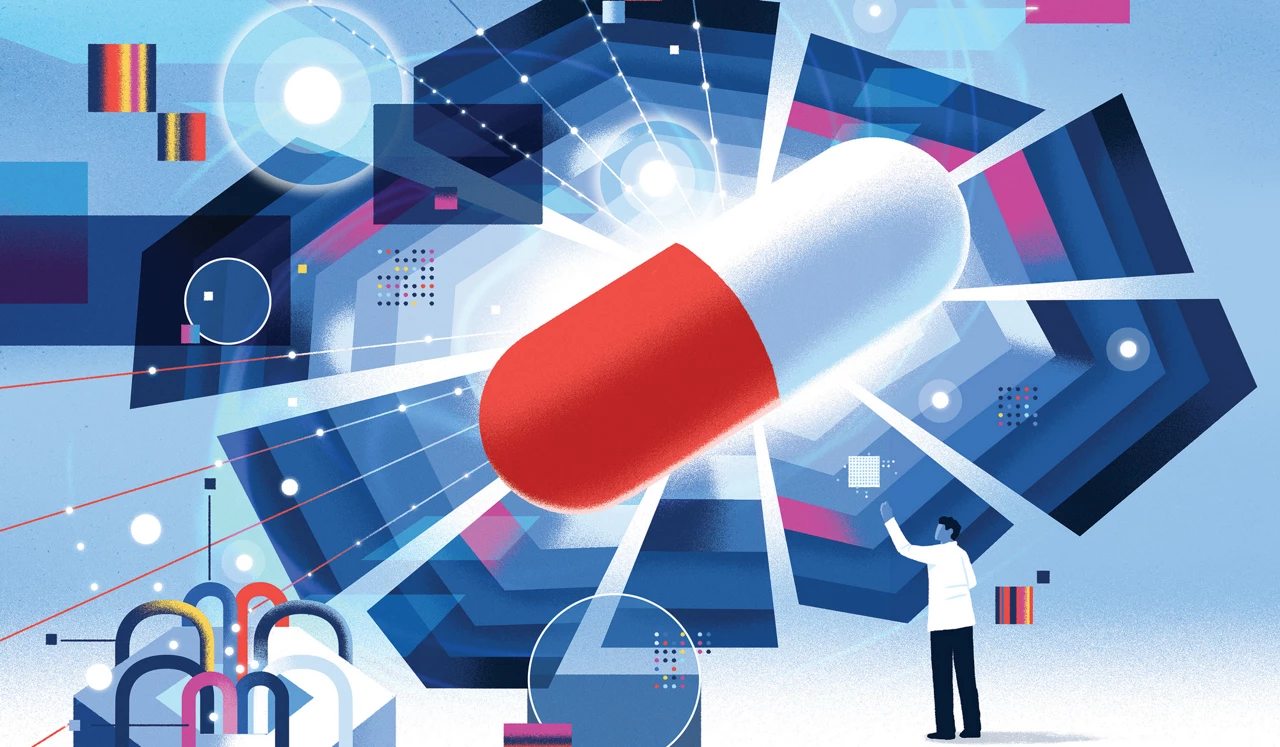
Pharmaceutical research traditionally requires decades of trial and error before a single pill reaches the pharmacy counter. This slow development timeline forces manufacturers to charge astronomical prices to recoup their financial losses. AI drug discovery alters this financial model entirely. Supercomputers now analyze billions of molecular combinations in weeks rather than years. By identifying successful chemical compounds early, laboratories avoid spending billions on doomed clinical trials. This speed translates directly into how commercial insurance carriers calculate future pharmacy benefits. Patients waiting for specialized treatments see new therapies arrive faster, carrying different retail price tags than traditional medications.
Speeding Up The Clinical Trial Process
The research and development phase consumes the largest portion of any pharmaceutical budget. Human scientists manually test chemical reactions, often hitting dead ends after months of work. Machine learning algorithms process massive datasets of human biology to predict exactly how a synthetic molecule will behave inside the body. The Food and Drug Administration monitors these algorithmic predictions to verify their clinical accuracy before approving human trials.
Skipping the physical trial-and-error phase saves manufacturers billions of dollars. Insurance companies rely on this reduced research overhead to negotiate lower bulk purchasing rates. A drug developed for fifty million dollars costs the insurance risk pool significantly less than a drug developed for two billion dollars. Carriers factor these lowered research costs into their annual actuarial projections, shifting the entire financial baseline of modern medicine.
Predicting Medication Efficacy For Chronic Diseases
Treating chronic conditions like rheumatoid arthritis or lupus often involves a lengthy period of guessing. A physician prescribes a heavy biologic, waits three months, and hopes the patient responds positively. AI-powered drug discovery targets the exact genetic markers causing the disease. This creates highly specific therapies that work on the first try. Commercial insurers aggressively favor this precision. Paying for one successful prescription makes far more financial sense than funding six months of failed pharmacy claims.
To manage the approval of these highly specialized medications, many corporate carriers now use AI health insurance assistants to review patient charts. These digital tools confirm the patient holds the exact genetic profile required for the new medication to succeed. The National Institutes of Health tracks how these targeted therapies lower the total cost of managing chronic diseases across entire hospital systems. Better initial targeting prevents the costly hospital readmissions associated with unmanaged autoimmune flares.
Breaking Down The Pharmacy Formulary Structure
Health insurance companies organize covered medications into specific pricing tiers. Cheap generics sit on tier one, costing the patient a few dollars. Specialty biologics sit on tier four or five, requiring a steep coinsurance percentage. As AI algorithms flood the market with newly discovered treatments, insurance actuaries must decide where to place them on this formulary.
High development speed does not always guarantee a low retail price immediately. Pharmaceutical companies still hold patents on these AI-generated molecules. The American Medical Association guides physicians on how to prescribe these novel treatments and manage complex insurance formularies effectively. Patients must audit their prescription coverage during open enrollment to verify exactly which pricing tier their carrier assigns to these new synthetic medications.
Reevaluating Prior Authorization Requirements
Accessing modern treatments requires strict adherence to corporate insurance protocols. Carriers implement prior authorization rules to stop doctors from prescribing expensive medications when a cheaper alternative exists. AI-powered drug discovery creates highly effective, but sometimes costly, primary interventions. Patients and their doctors must build a flawless paper trail to secure approval. The physician submits clinical notes proving the patient’s biology matches the targeted treatment.
Independent economists at the Kaiser Family Foundation consistently analyze how these authorization hurdles impact patient access to novel pharmaceutical products. If the insurer denies the initial request, the patient retains the legal right to file a formal appeal. Providing published clinical data that validates the AI-discovered drug often forces the carrier to overturn their denial and approve the specialized pharmacy claim.
The Financial Impact On Monthly Insurance Premiums
Commercial insurance providers base their entire financial structure on risk predictability. Actuaries calculate the exact cost of treating illnesses across a massive population. AI drug discovery offers a unique actuarial advantage. Curing a disease completely with a newly discovered compound eliminates years of expensive hospital admissions.
When overall hospital utilization drops, the insurance carrier protects its profit margins. They pass those savings down to the consumer in the form of stable monthly premiums. Tracking data from the World Health Organization shows how integrating intelligent systems into the pharmaceutical supply chain lowers the global cost of medical care. Patients benefit directly when their insurance plans spend less money on lifelong symptom management and more money on immediate, algorithmic cures.
AI Drug Discovery At A Glance
| Market Function | Clinical Impact | Insurance Reaction |
|---|---|---|
| Synthetic Molecule Generation | Skips physical trial-and-error testing | Lowers the bulk purchasing cost of new medications |
| Genetic Targeting | Creates highly specific chronic disease therapies | Eliminates wasted spending on failed pharmacy claims |
| Faster FDA Approval | Brings life-saving drugs to market months earlier | Forces carriers to update their formulary tiers rapidly |
| Treatment Efficacy Prediction | Guarantees the drug matches the patient’s biology | Prompts insurers to streamline prior authorization requests |
